| CRAFTS |
| |
The
history of Indian crafts is as old as its origin. The first
references to Indian crafts can be found from the Indus Valley
Civilization (3000 B.C.-1700 B.C.). The craft tradition in India
has revolved around religious beliefs, local needs of the commoners,
as well as the special needs of the patrons, royalty and trade.
These craft traditions have withstood the ravages of time and
continue to flourish owing to the assimilative nature of Indian
culture. |
| FABRICS |
|
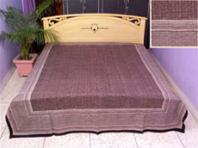
India
has a diverse and rich textile fabric tradition. The origin
of Indian fabric textiles can be traced to the Indus valley
civilization. The people of this civilization used homespun
cotton for weaving their garments. Excavations at Harappa and
Mohen -jo-Daro, have unearthed household items like needles
made of bone and spindles made of wood, amply suggesting that
homespun cotton was used to make garments. Fragments of woven
cotton have also been found from these sites.
The first literary information about fabric textiles in India
can be found in the Rigveda, which refers to weaving. The ancient
Indian epics-Ramayana and Mahabharat also speak of a variety
of fabrics of those times. The Ramayana refers to the rich styles
worn by the aristocracy on one hand and the simple clothes worn
by the commoners and ascetics. |
| Ready
made garments |
|
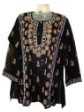
The
ready made garments industry in India is one of the best in
the world. An extremely well organized sector, garment manufacturers,
exporters, suppliers, stockists and wholesalers are the gateway
to an extremely enterprising clothing and apparel industry in
India. Today, garments exports from India have made inroads
into the international market for their durability, quality
and beauty. One of the reasons for the economical pricing of
India's ready made garments and apparels is the availability
of highly skilled, cheap labor in the country |
| Woolen |
|
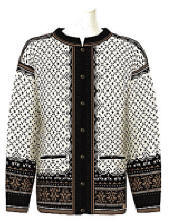
The
knitwear industry in India is poised for a major take-off in
the world of fashion as designers find a lucrative outlet for
their creative ideas. With India’s rich history of textile
traditions and the skills of her craftsmen, it is not surprising
that the country should make a foray into the exciting world
of woolen knitwear. With the help of the International Wool
Secretariat (IWS) the Indian woolen knitwear industry has been
groomed for the past three years to match its creative skills
with international standards and also to improve its designing
skills |
|
|